If you’ve ever wondered how to play Doxology on piano, you’re in the right place. Often known by its opening line, “Praise God from whom all blessings flow,” this hymn is a cornerstone of Christian worship. Whether you’re accompanying a congregation, leading a small group, or simply learning for personal devotion, Doxology is a must-know piece for church pianists.
In this guide, we’ll break down a simplified arrangement that makes the hymn approachable for beginners, while still sounding rich and full.
The Key and Setup
Doxology is in the key of G major, which means you’ll be playing all white keys, except F will be raised to F♯.
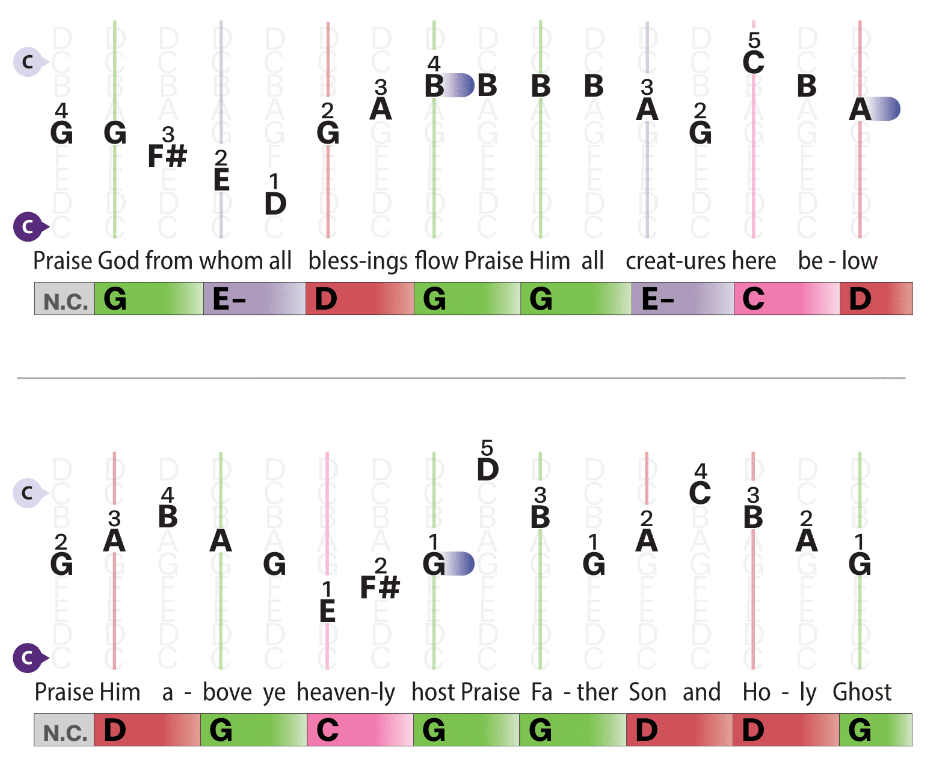
- Place your right hand ring finger on G to start.
- The melody begins with: G – G – F♯ – E – D.
- From there, you’ll stretch to higher G, then play A – B, and continue walking through the scale.
This hand position will carry you through most of the piece.
The Right-Hand Melody
The right hand focuses on the vocal line—the part you’d sing if you know the hymn.
- Start with a pickup note on G, then land on “God.”
- Continue with stepwise motion (F♯, E, D), matching the text “from whom.”
- On “blessings flow,” land hands together to emphasize the phrase.
A helpful technique is using pivot points—stretch your thumb under to reposition your hand smoothly. You’ll also encounter arpeggios (broken chords), which add a nice rolling sound.
The Chords
The simplified arrangement uses just four basic chords, all in root position:
G major (G – B – D)
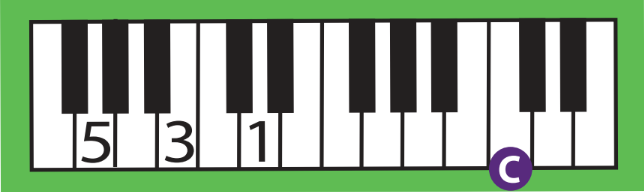
E minor (E – G – B)

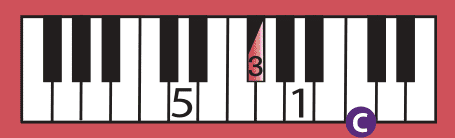
D major (D – F♯ – A)
C major (C – E – G)
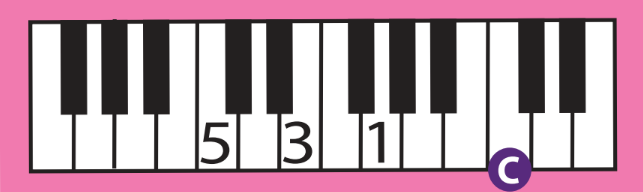
You can play these chords in the left hand, while the right hand handles the melody. If you’d rather sing and just accompany yourself, play the chords in the right hand and the root note of each chord in the left hand.
Putting Hands Together
When combining melody and chords, the trick is to align them with the lyrics:
- On “Praise God,” hands land together.
- On “from whom,” hands meet again.
- On “all blessings,” both hands come together.
- On “flow,” hands align for the cadence.
This creates a natural flow that matches how the hymn is sung in church.
Fun Variations
Once you’ve mastered the basics, here are a few ways to make your playing more expressive:
- Ending with Amen: Use a IV–I cadence (C to G) to finish with strength. You can even make the C chord minor for a more dramatic effect.
- Tempo flexibility: Play slow and reverent, or more upbeat if the service calls for it. Listen to singers and adjust accordingly.
- Octaves in the right hand: Doubling the melody in octaves makes the hymn sound bigger and more triumphant.
Tips for Practice
- Start slowly, focusing on smooth hand transitions.
- Break it down: learn the right hand first, then chords, then combine.
- Experiment with dynamics (soft vs. strong playing) to give the hymn emotional depth.
Final Thoughts
Learning how to play Doxology on piano is not just about hitting the right notes—it’s about creating a worshipful atmosphere. This simplified version keeps the arrangement approachable while giving you room to grow into fuller harmonies and advanced techniques like octaves and inversions.
Whether you’re accompanying a congregation or playing at home, Doxology is a timeless hymn that deserves a place in your repertoire.
Check out these tutorials for more easy piano songs.


