
Learning to play gospel and folk classics is one of the best ways to improve your piano skills while having fun. In this beginner-friendly lesson from Piano by Pictures, we’ll break down how to play “He’s Got the Whole World in His Hands” on the piano. You’ll learn the melody, the simple chord structure, and even some extra techniques to make the song sound richer.
Whether you’re brand new to piano or looking for a quick song to add to your repertoire, this tutorial will guide you step by step.
Step 1: Playing the Melody
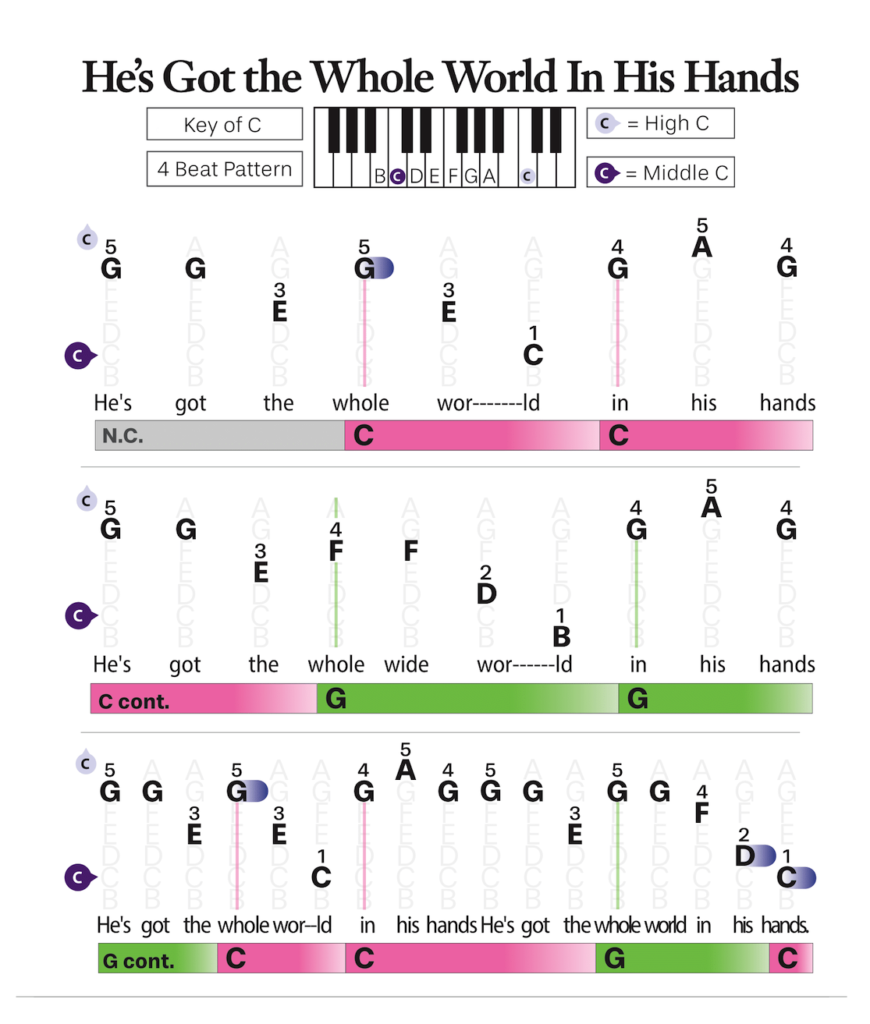
The melody for “He’s Got the Whole World in His Hands” is simple and repetitive, making it perfect for beginners. Start with your right hand:
- Place your pinky on G and begin the melody.
- You’ll move between G, E, C, A, F, D, and B as the song progresses.
- Stretch your ring finger occasionally up to reach the A and higher G notes.
Take your time with this part. Once you can play the melody smoothly, you’ll notice it naturally outlines the chords beneath it.
Step 2: Adding the Chords
This song only uses two chords:
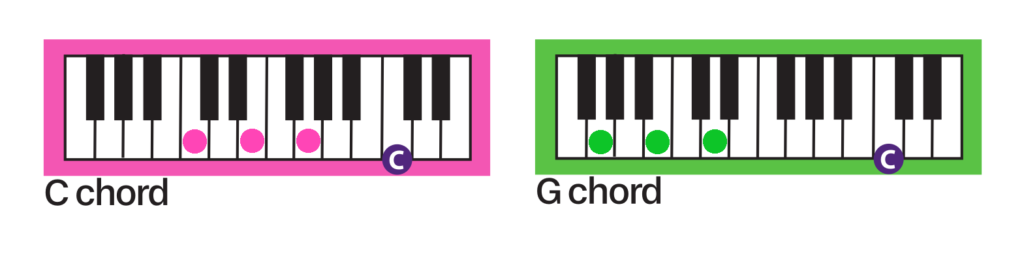
- C Major
- G Major
That’s it! The simplicity of the chord structure makes this an excellent piece for practicing transitions between the I chord (C) and the V chord (G).
Here’s how to play them:
- In the left hand, play the root and the fifth of each chord (C + G for C major, G + D for G major).
- In the right hand, you can play full chords to accompany the melody.
When you add the chords to the melody, you’ll notice a “mirror” effect. For example, when the melody emphasizes notes from the C chord, the left hand is also holding down that chord, creating a full, satisfying sound.
Step 3: Using G7 for Tension and Release
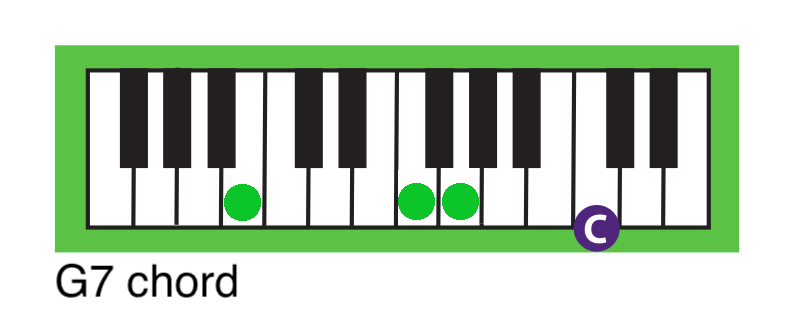
A powerful way to make the song sound more expressive is to add the F note to the G chord, turning it into a G7 chord.
Why does this sound so good?
- The G7 chord creates tension.
- That tension resolves beautifully when you return to the C chord.
This “tension and release” is the foundation of Western music theory, and “He’s Got the Whole World in His Hands” is a perfect introduction to that concept.
Step 4: Playing with Rhythm
To give the song energy:
- Play the chords in rhythm with your left hand while the right hand plays the melody.
- Try alternating the root and fifth of each chord in the bass.
- Sing along or have someone else sing while you play—it brings the song to life.
Step 5: Practice the I–V Relationship
The relationship between C (I) and G (V) is one of the most important in music. By practicing this song, you’re not just learning a classic spiritual—you’re also strengthening your understanding of chord progressions that appear in countless other songs.
Why This Song Is Great for Beginners
- Simple melody – easy to memorize.
- Only two chords – C and G (with the option of G7).
- Teaches music theory basics – the I–V relationship, tension, and resolution.
- Fun to sing and play – works as a solo piece or with a group.
Final Thoughts
We hoped you enjoyed learning how to play “He’s Got the Whole World in His Hands” on piano. It’s a timeless song that’s both fun and educational to learn on piano. Start with the melody, add in the chords, experiment with G7 for tension, and then bring it all together with rhythm and singing.
This piece is a great introduction to the power of simple chord progressions and will give you confidence as you move on to more complex songs.
Check out our tutorials to learn more easy piano songs.


